

The right choice depends on your property type, guest expectations, and the story you want to tell.
Guest Perception
For many guests, toiletries are one of the most personal parts of the stay. After check-in, they often head straight to the bathroom to see what products are offered.
- Single-use toiletries deliver a personal touch. Each guest gets something new, sealed, and just for them. Small hotels, inns, and boutique properties often benefit here because guests are looking for an “experience” that feels thoughtful and private.
- Bulk dispensers increasingly signal sustainability and modernity. Guests who value eco-friendly practices may appreciate seeing dispensers mounted on the wall—it shows you’re conscious of waste and committed to reducing plastics.
The catch: some guests are skeptical. They may worry about hygiene (“who used this bottle before me?”) or find the look less polished if bottles get worn over time.
Real-World Guest Feedback
Based on surveys from small hotels that switched from singles to bulk:
- Positive responses: “I appreciate the eco-friendly approach” (38%), “Less clutter in the bathroom” (22%)
- Negative responses: “Missed the personal touch” (18%), “Worried about hygiene” (12%)
- Neutral: “Didn’t notice or care” (30%)
The key insight: presentation matters. Well-maintained, high-quality dispensers with clear labeling can mitigate most concerns.
Cost Considerations
Here’s where the differences become clearer:
- Singles are more expensive. Individual bottles use more packaging, cost more per ounce, and increase freight costs. They also create higher labor costs for housekeeping: collecting half-used tubes, sanitizing unused ones, and restocking for each guest stay.
- Bulk saves money long term. A dispenser can last weeks before replacement, staff only need to top off or swap cartridges, and packaging costs are lower. The upfront setup may cost $40–80 per room, but over time, product and labor savings add up.
Detailed Cost Breakdown
Let’s look at a 20-room property with 70% occupancy:
Single-use scenario:
- Cost per bottle set (shampoo, conditioner, body wash, lotion): $1.25
- Annual cost: 20 rooms × 365 days × 0.7 × $1.25 = $6,387.50
- Labor: 5 minutes per room per day × 20 rooms × 365 × $15/hour = $8,760
- Total annual cost: ~$15,147.50
Bulk dispenser scenario:
- Upfront cost: $60 per room × 20 rooms = $1,200 (one-time)
- Refill cost: $0.15 per ounce, 200 oz per room annually = $600
- Labor: 2 minutes per room per week × 20 rooms × 52 × $15/hour = $3,120
- Total annual cost: ~$3,720 (plus $1,200 first year)
Savings: Over $11,000 annually after the first year.
Waste and Sustainability
Waste is where bulk usually wins, but with some nuance:
- Singles: Plastic waste is high. Guests often use only a fraction of a tube or bottle, but everything must be discarded. While some programs recycle hotel amenities, most waste still ends up in landfill. On the flip side, singles can actually reduce liquid consumption—guests are less likely to over-pump or “flush” product like they sometimes do with dispensers.
- Bulk: Less packaging, less product waste, and a clearer sustainability story. Guests notice when you take visible steps to reduce waste, and wall dispensers are a simple way to demonstrate your property’s commitment to the environment.
Environmental Impact by the Numbers
For that same 20-room property:
Single-use waste:
- Plastic bottles: 20 rooms × 365 × 4 bottles × 10g = 292 kg plastic waste annually
- Unused product: Estimated 30% waste = 90 liters of liquid waste
Bulk waste:
- Plastic bottles: 20 rooms × 4 refills × 50g = 4 kg plastic waste annually
- Unused product: Estimated 10% waste = 20 liters of liquid waste
Reduction: 98.6% less plastic waste, 77.8% less liquid waste.
Implementation Strategies
Transitioning from Singles to Bulk
- Pilot test: Start with 2-3 rooms for 30 days, gather guest feedback
- Staff training: Train housekeeping on proper refill procedures and hygiene protocols
- Signage: Place small cards explaining your sustainability initiative
- Quality matters: Invest in attractive, durable dispensers that match your decor
- Monitor: Track guest comments and adjust as needed
Making Singles Work Better
If you choose to stick with single-use:
- Right-size: Offer smaller bottles to reduce waste
- Quality over quantity: Premium products create better impressions
- Recycling program: Partner with organizations that recycle hotel amenities
- Branding: Custom labels can turn toiletries into marketing tools
- Selective placement: Offer bulk in common areas, singles in guest rooms
Branding and Marketing Angle
Single-use amenities can be a subtle marketing tool. When guests take unused bottles home, they act as a reminder of your property. For smaller hotels trying to build loyalty, this kind of advertising has value.
Bulk amenities don’t provide the same “souvenir” effect, but they do tell a sustainability story. If your brand is positioned around eco-consciousness, that may matter more.
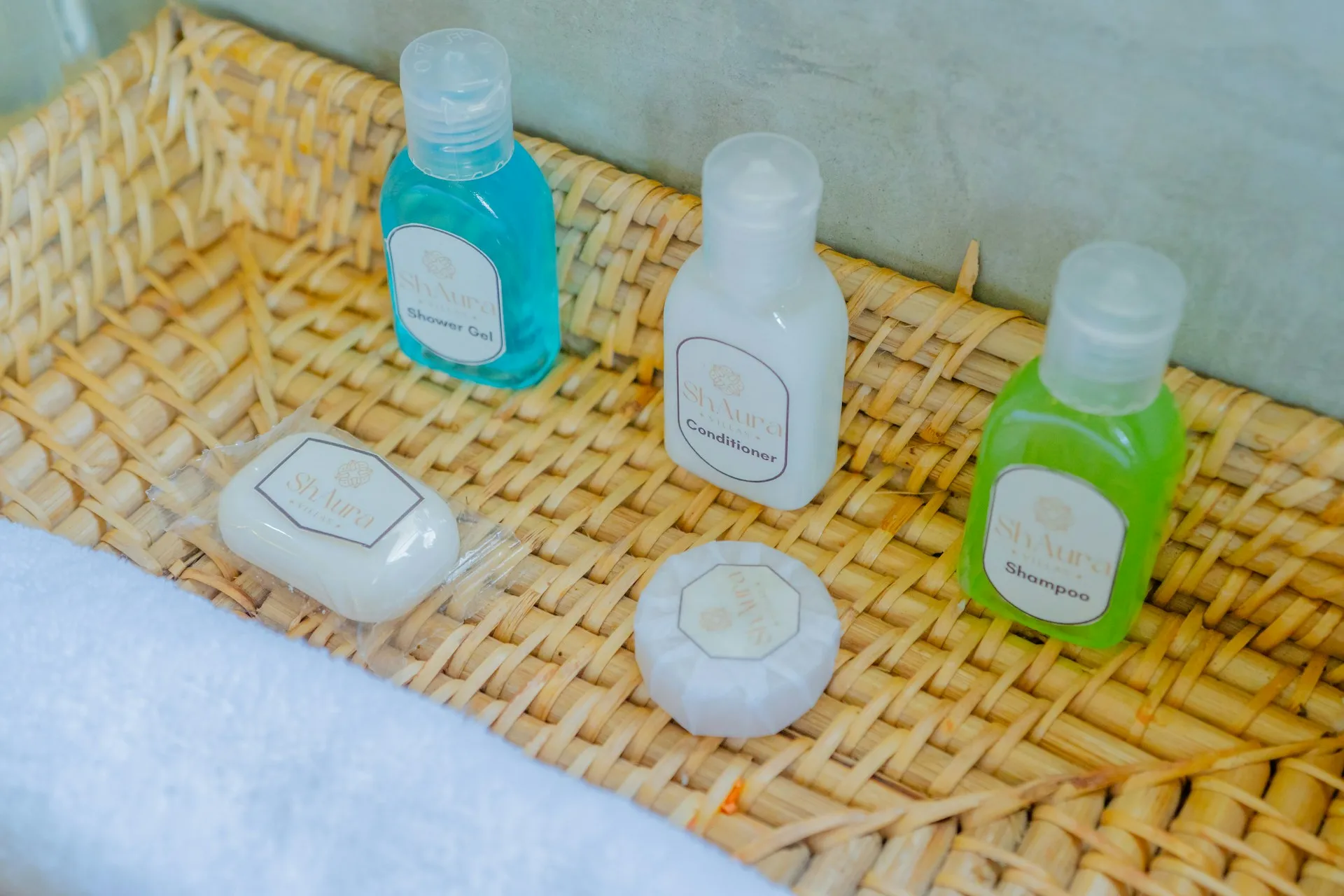
For small hotels, giving guests a quality take-home item is often a worthwhile form of marketing.
Case Study: The Green Pine Inn
This 15-room boutique hotel in Vermont switched from premium single-use toiletries to high-end bulk dispensers:
- Cost savings: $8,200 annually
- Guest satisfaction: 92% positive feedback on sustainability initiative
- Marketing benefit: Featured in local eco-tourism guides
- Operational impact: Housekeeping time reduced by 30%
The key to their success was communication—they explained the change as part of their commitment to sustainability, and guests responded positively.
Which is Right for Your Property?
There’s no one-size-fits-all answer. The choice depends on your guest mix and your positioning:
- Choose Singles if you run a boutique, inn, or smaller property where the personal touch matters most, and where cost and waste are secondary to experience.
- Choose Bulk if you’re operating at scale, want to lower costs, and need to showcase visible eco-friendly practices.
Decision Matrix
| Factor | Single-Use | Bulk Dispensers |
|---|---|---|
| Guest Perception | Luxury, personal | Eco-friendly, modern |
| Cost (long-term) | High | Low |
| Labor Requirements | High | Low |
| Waste Generated | High | Low |
| Marketing Potential | Take-home branding | Sustainability story |
| Best For | Boutique, luxury, short stays | Budget, eco-focused, extended stays |
Closing Thoughts
Bathroom amenities are a small line item with an outsized impact. Guests will notice them, remember them, and sometimes even judge your property by them.
- Singles = more cost, more waste, but a higher sense of luxury and privacy.
- Bulk = less cost, less waste, but potential perception hurdles.
Whichever route you choose, make it intentional. Amenities aren’t just soap and shampoo—they’re part of your guest experience story.
Action Plan
- Assess your property: What’s your brand position? Who are your guests?
- Run the numbers: Calculate your current costs and potential savings
- Talk to guests: Get feedback on what they value most
- Pilot test: Try a small-scale implementation before full rollout
- Communicate: Explain your choice to guests through signage and staff training
Frequently Asked Questions
Do guests prefer bulk dispensers or single-use bottles?
Singles feel more private/luxury, while well-presented bulk reduces waste and cost. Perception can vary—signage and quality matter either way.
Which is cheaper over time?
Bulk dispensers typically reduce per-use cost and shipping waste; singles cost more and generate more trash, but can fit premium positioning.
How do we handle tamper concerns with bulk?
Use locking dispensers, mount securely, label clearly, and add a light inspection step to housekeeping checklists.
What’s a simple decision rule?
Match to brand and guest mix: budget/eco properties lean bulk; higher-end or short-stay business segments may justify singles for perception.
Can we offer both options?
Yes! Some properties offer bulk dispensers in showers and single-use items for lotion or special requests. This hybrid approach can balance cost, waste, and guest satisfaction.
How do we communicate the change to guests?
Use tent cards in bathrooms, mention it at check-in, and highlight your sustainability efforts on your website and social media.